ON-TIME DELIVERY IN
LASER CUTTING

Planning complexity fully captured

Planning knowledge made accessible

Production plans on demand, even at short notice

Transparency in the planning process

Planning complexity fully captured

Planning knowledge made accessible

Production plans on demand, even at short notice

Transparency in the planning process

Meiller Aufzugstüren GmbH


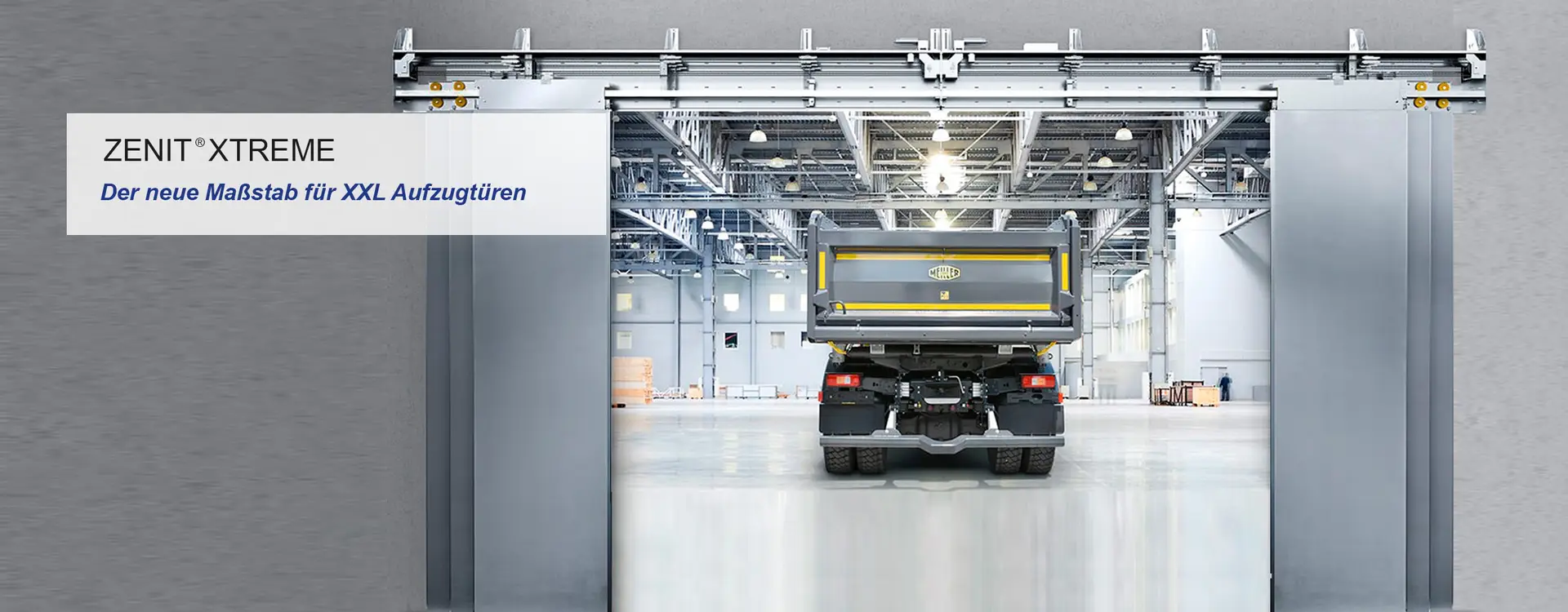
MEILLER Aufzugtüren GmbH specializes in the development and production of high-quality elevator door solutions for passenger and freight elevators. In pre-production at the Trumpf laser, it is determined every day whether delivery dates are met and how efficiently material is used. This is exactly where planning complexity becomes visible. Sequencing, setup and plate layout (nesting) are directly interconnected. Even a small change can noticeably shift the daily schedule.


MEILLER aims not only to manage this complexity, but to use it strategically to create an operational advantage. The goal is a process that remains stable, is easy to understand and continues to function reliably even when short-term changes occur. To achieve this, DeepSynergy.AI brings the relevant planning logics together in an automated detailed scheduling approach. All requirements are considered consistently. The result is a robust production plan that can be updated quickly when changes occur and truly holds up in day-to-day operations.

https://www.meiller-aufzugtueren.de/de/

THE LOGIC BEHIND OUR PLANNING IS NOW VISIBLE. THAT MAKES DECISIONS FASTER, MORE TRACEABLE AND THE PROCESS NOTICEABLY MORE STABLE.

–  Production Manager, MEILLER –

PLANNING AS A BOTTLENECK

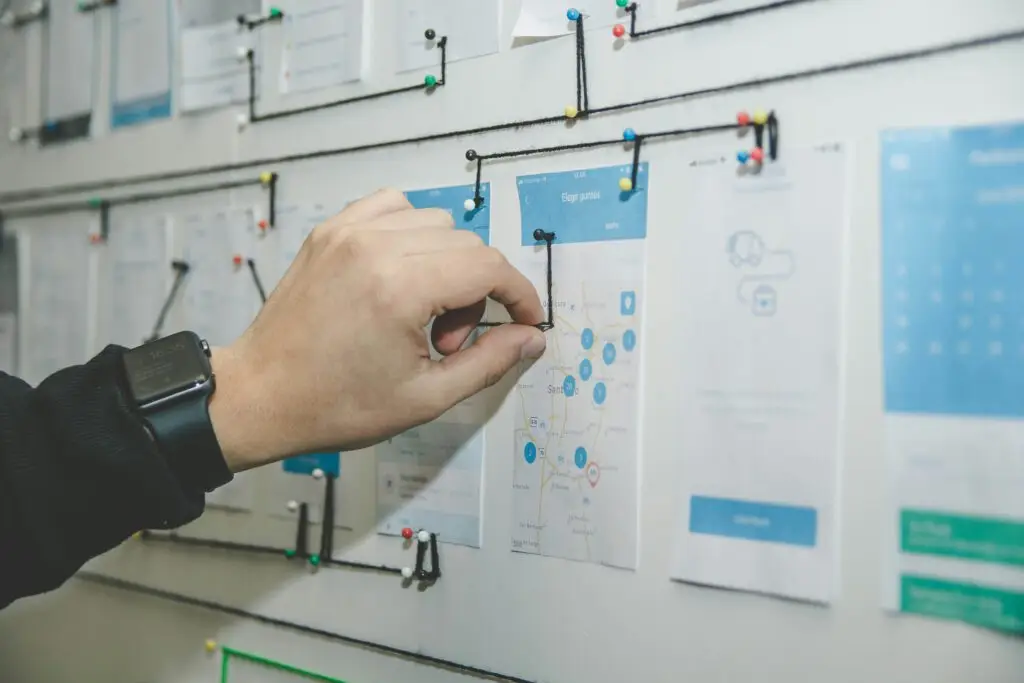
Planning is still highly manual and requires extensive coordination. Orders are prepared in Excel and often processed on the shopfloor in sequence. Much of the information flow still relies on paper notes and short-notice coordination. Dependencies between orders are only partially visible. As a result, consistent prioritization is difficult, and the plan reacts sensitively to changes. Adjustments create additional effort and quickly affect process stability.

Added to this is the central trade-off. Meeting due dates, optimizing plate layout and reducing setup effort directly influence one another and must be considered together.

A due date is a fixed delivery or completion date that serves as an anchor for prioritization. In practice, prioritization becomes difficult when related orders are not clearly linked in the system or carry different due dates. This creates a distorted view of priorities. A consistent due-date logic ensures that related orders are evaluated together. This makes sequencing more stable and easier for the team to understand.

In laser cutting, parts are cut from metal sheets. How parts are combined on a sheet has a direct impact on material efficiency. If residual areas remain unused, scrap increases. Intelligent planning therefore considers not only the sequence, but also meaningful combinations of parts. This makes it possible to utilize sheets more efficiently without losing sight of due-date requirements.

Setup includes the preparatory steps required before an order can be processed. Changes, for example between materials or process parameters, create additional effort. This effort directly influences sequencing. Intelligent planning reduces setup effort by grouping changes where it makes sense while still respecting due-date requirements. This stabilizes the daily schedule and reduces short-term replanning.

MEILLER’s expectation is a structured and transparent planning approach. Due dates should be managed reliably, material should be used efficiently, and coordination across production should become more stable.

DEFINING PLANNING LOGIC TOGETHER

This is where the collaboration with MEILLER begins. Based on the initial situation, the key trade-offs and MEILLER’s expectations, we start with a joint workshop. In this workshop, we capture the relevant planning logics, dependencies and priorities.

These planning logics are then documented in a structured way and discussed with MEILLER. This creates a shared understanding of what is being planned, which logics guide decisions and which objectives take priority. It increases the traceability of decisions and creates a solid foundation for implementation.

On this basis, we configure the DeepSynergy.AI Planning Engine. The documented logic becomes the foundation for the software and the first production plan.

FROM PLANNING INPUT TO PLANNING OUTPUT

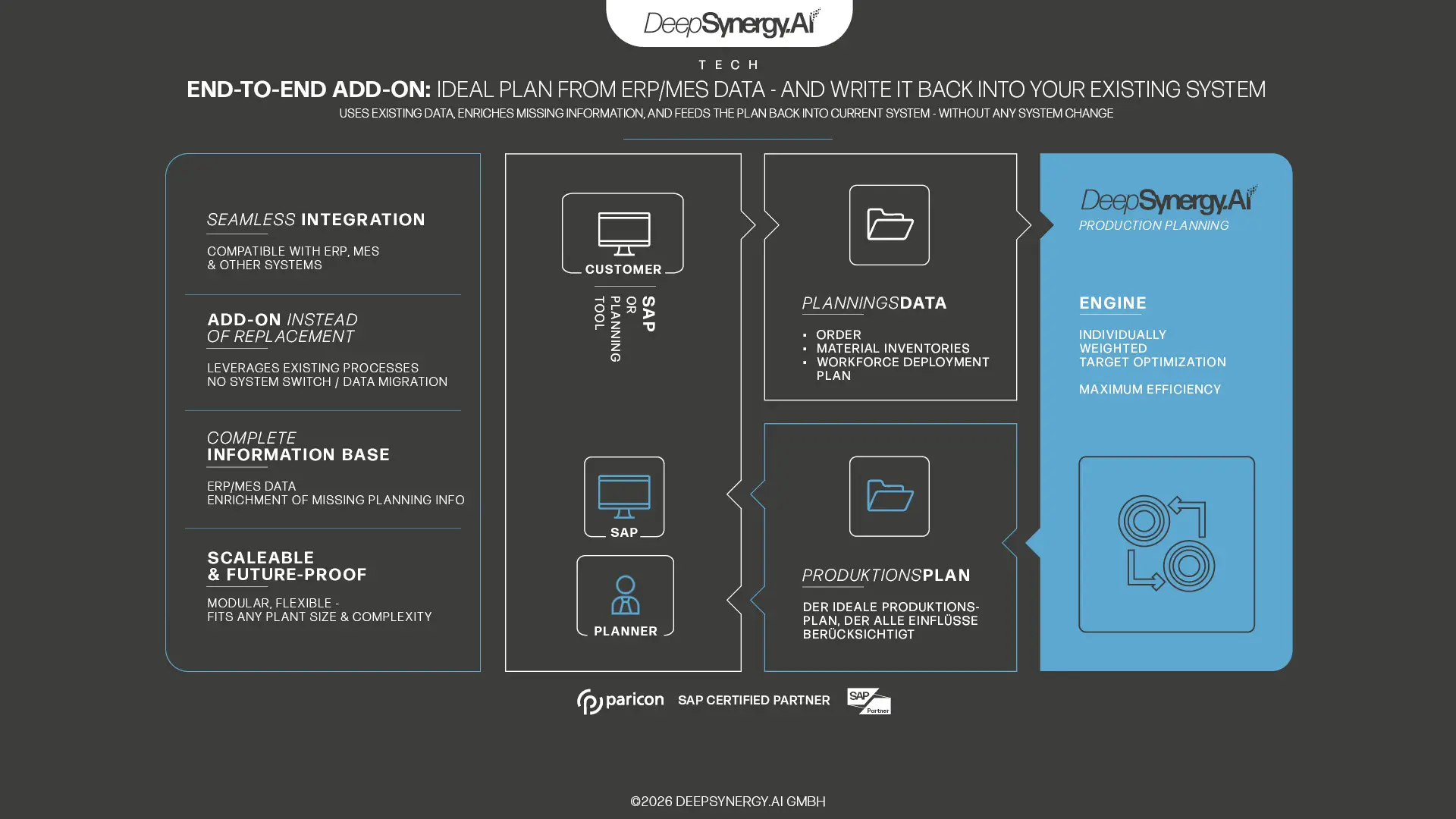
At MEILLER, the data flow starts in the existing systems. Production orders are taken from SAP and supplemented with structured Excel data. What matters is not as much data as possible, but the right information in the right structure. This includes orders, due-date requirements, material-related parameters and the agreed planning logics.

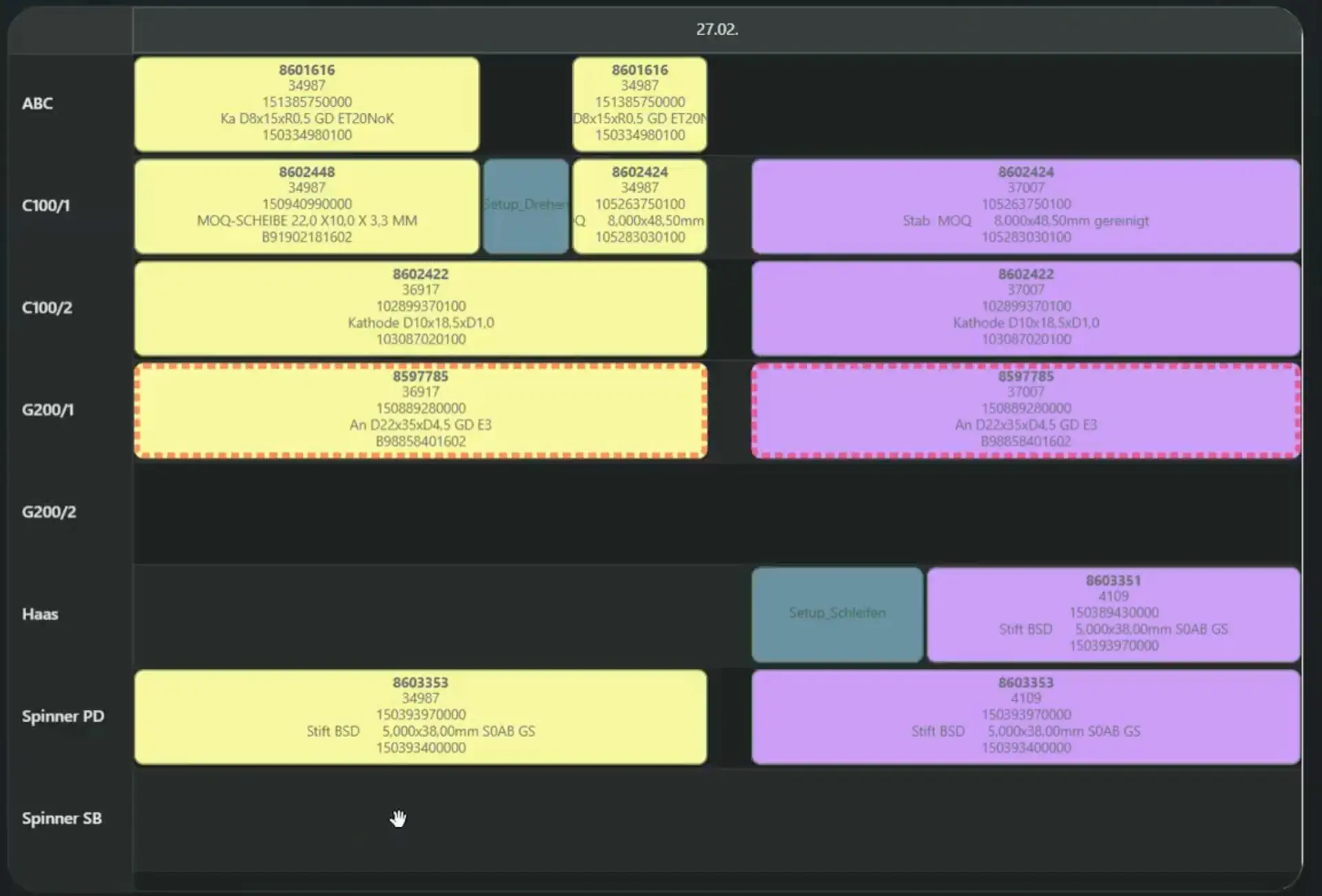
This foundation flows into the DeepSynergy.AI Planning Engine. There, logics and priorities are mapped in a weighted objective system. This enables the engine to consistently balance trade-offs between on-time delivery, material efficiency and setup effort. The result of this data flow is a concrete output: MEILLER receives a production plan and a transparent basis for nesting layout. When changes occur, the plan can be updated quickly and consistently.

THE LOGIC BEHIND THE PLAN

At MEILLER, DeepSynergy.AI maps detailed scheduling and control at the Trumpf laser as a consistent planning logic. The solution consists of five building blocks that jointly manage sequencing, setup logic and sheet layout.

Orders are prioritized so that due dates are reliably taken into account. Dependencies between orders are systematically considered as well. This creates a sequence that remains workable in day-to-day operations.

Setup activities and changeovers directly influence both effort and sequence. The setup logic consistently reflects these influences, including relevant special cases. This makes sequencing more realistic and more stable.

In laser cutting, the way parts are combined on sheets determines material efficiency. The logic treats sheet layout as an integrated part of detailed scheduling. As a result, sequencing and material decisions are considered together.

Where it makes sense, orders are broken down into smaller quantities and combined. This enables more flexible planning without losing sight of due-date requirements. In this way, planning can respond better to real operational constraints.

New or changed orders do not trigger manual replanning, but a consistent update of the plan. The logic remains the same; only the input parameters change. This allows the plan to be regenerated quickly.

https://www.meiller-aufzugtueren.de/de/

FROM PLAN TO IMPACT

In day-to-day operations, it is not the model that matters, but the impact. At MEILLER, planning becomes traceable and repeatable. Decisions are based on a consistent logic rather than situational individual decisions. Changes can be integrated cleanly into the process without planning losing stability.

DAY-TO-DAY CHANGES

Clarity on the impact of priorities
It becomes transparent how different priorities affect due dates, material utilization and the overall planning process.

Less coordination effort
Planning and production work on a shared basis. Coordination becomes more targeted and operational effort decreases.

More stable process despite disruptions
Short-term changes and operational disruptions lead to less instability. The process remains manageable and can be adjusted in a structured way.

CREATED OPPORTUNITIES

Planning becomes scalable
Recurring decisions are handled consistently. Know-how is systematically captured and is less dependent on individual people.

Material efficiency and on-time delivery combined
Multiple objectives are considered simultaneously instead of being optimized in isolation.

Better coordination in production
Downstream processes are supplied more reliably. Process fluctuations decrease and collaboration in production becomes more stable.

WHY PLANNING AT ORDER LEVEL IS NOT ENOUGH

Many production orders consist of multiple quantities or line items that must be completed together by a specific date. In traditional systems, however, planning is often still done at order level. This creates a disadvantage: when orders are treated only as closed units, potential in sheet layout remains unused.

A key lever is therefore planning at piece level. Individual parts of an order can be combined with parts from other orders so that sheets are utilized more effectively and scrap is reduced. The critical point is that the common due date of the higher-level order must still be met consistently.

Piece-level logic instead of rigid order logic
DeepSynergy.AI breaks production orders down into plannable units. This makes it possible to distribute parts across multiple sheets and combine them with parts from other orders at the same time.

  • Orders become plannable at piece level.

  • Parts from different orders can be nested together.

  • Due dates remain consistent across the overall order.

At MEILLER, a single order may include several identical components required for a door or assembly by a defined due date. If this order were planned only as a whole, the parts would often be grouped on one sheet or on a few directly consecutive sheets. As a result, free space in the nesting layout often remains unused, even though it could be meaningfully filled with suitable parts from other orders.

In detailed scheduling, these orders are therefore broken down to piece level. Individual components of one order can be distributed across different sheets and combined with parts from other orders during nesting. This results in a significantly more efficient sheet layout: residual areas are used better, scrap is reduced, and at the same time it remains ensured that all required quantities of the order are produced in time for the due date.

  • Better utilization of available sheet area

  • Less scrap through intelligent nesting

  • On-time delivery despite cross-order combination

VALIDATED RESULTS IN 8–12 WEEKS

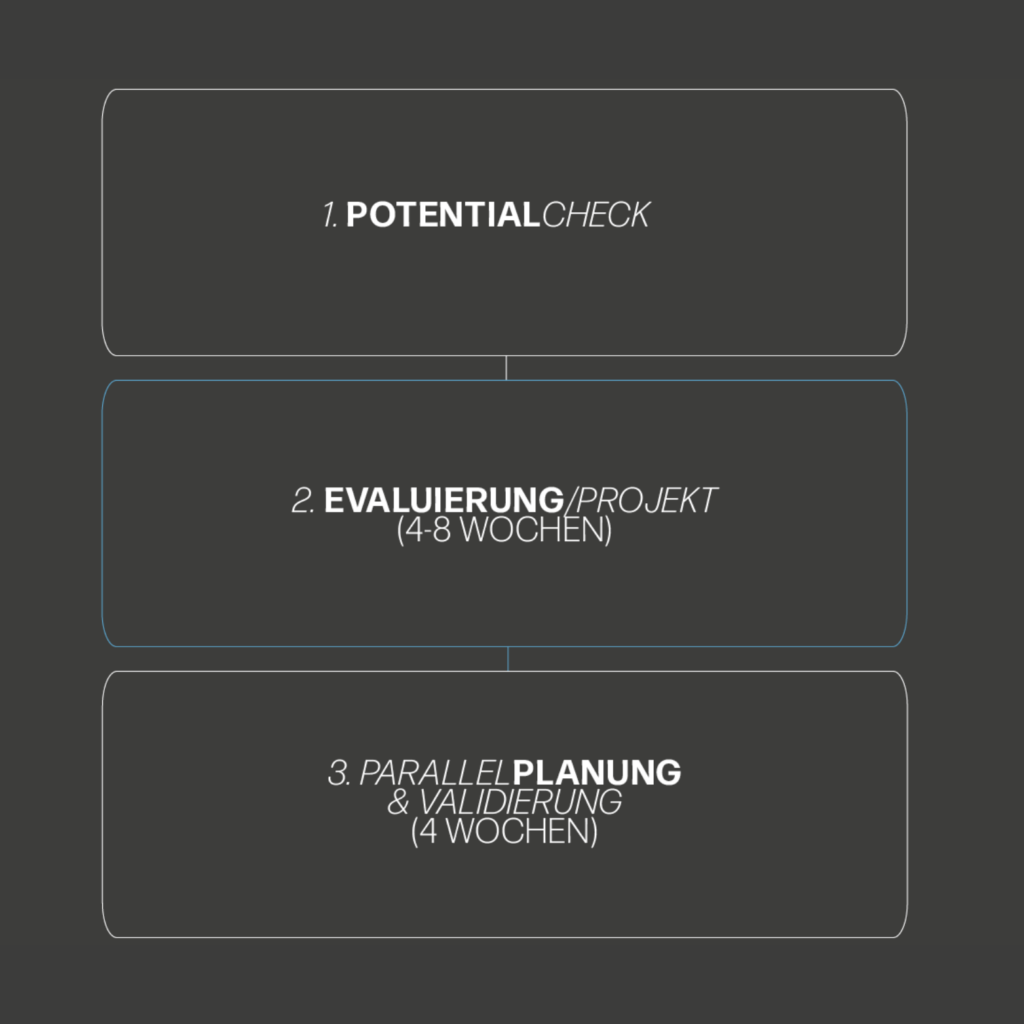
1. Potential analysis
Together, we assess the current planning situation at MEILLER: Where are the bottlenecks, challenges and trade-offs? This creates a clear picture of the potential within planning and where DeepSynergy.AI can create value.

2. Parallel planning
In joint workshops, we analyze the existing planning process and make planners’ knowledge structured and usable. Requirements, dependencies, priorities and planning logics are identified together and translated into a robust planning foundation. On this basis, an initial production plan is created with DeepSynergy.AI and reviewed alongside the existing planning approach.

3. Validation
In the final step, the results are evaluated in parallel operation. To do this, we compare key KPIs of the current planning approach with the results generated by DeepSynergy.AI. This creates a solid basis for transparently assessing impact, robustness and the next steps.

READY TO TRANSFORM YOUR PLANNING?

Whether in production, logistics or other planning challenges

– DeepSynergy.AI is your partner for complex solutions

Nutzen Sie jetzt Ihre Effizienzpotenziale – mit KI-basierter Produktionsplanung Individuelle Beratung für eine automatisierte, hochoptimierte Produktionsplanung – auf Ihre Prozesse zugeschnitten.

Unlock your full efficiency potential with AI‑driven production planning. 
Benefit from bespoke consulting that delivers automated, ultra‑optimized schedules precisely tailored to your processes.